
Canberra is growing, and with that growth comes the need for more housing. The ACT Government is committed to enabling 30,000 new homes by 2030 in well-located, well-serviced areas, with access to transport, jobs, services, and community infrastructure.
Planning for growth and new housing in Canberra
To support this, the ACT Government is planning for more homes within the existing urban footprint, guided by the ACT Planning Strategy 2018 [PDF 18.5 MB]. This includes focusing on ‘key sites’ and ‘change areas’ identified in the 2023 District Strategies, particularly those close to rapid transport, such as the proposed light rail corridor from the City to Woden, which will improve accessibility and support more connected, convenient communities.
Within this context, a draft Southern Gateway Planning and Design Framework has been developed for community engagement. The draft Framework sets a vision for how the Southern Gateway corridor, extending from Parliament House to Farrer, could grow and change to 2050 and beyond. It recognises the proposed light rail and existing rapid bus and their potential to support transit-oriented development. Visit the ACT Government YourSay Conversations to read the draft Framework and have your say.
The ACT Government is releasing the draft Southern Gateway Planning and Design Framework alongside a Southern Gateway Community Needs Assessment so the community can provide feedback on the types of community, sport and recreation facilities needed to support it.
The Southern Gateway Planning and Design Framework is also identified in the Minister for Planning’s Statement of Planning Priorities as a priority project for the ACT Government.
The Southern Gateway corridor
The Southern Gateway corridor extends from Parliament House to Farrer and encompasses part of the Inner South and Woden districts and includes key centres like Curtin, Mawson and the Woden town centre. It is supported by major transport connections, including the proposed Light Rail Stage 2B route and existing rapid bus services, with potential for future light rail expansion further south.
The draft Framework divides the corridor into four distinct precincts, each with its own unique character and identity:
- Inner South precinct – includes parts of Yarralumla, Deakin, Barton and Forrest.
- Yarra Glen precinct – includes west Deakin, Curtin, Hughes and the future north Curtin residential area.
- Woden precinct – includes Lyons, Chifley and parts of Garran, including Canberra Hospital, as well as the future North Woden development area, the Woden Town Centre and the Phillip service trades area.
- Athllon precinct – includes Swinger Hill, Pearce, Torrens, Mawson and Farrer.
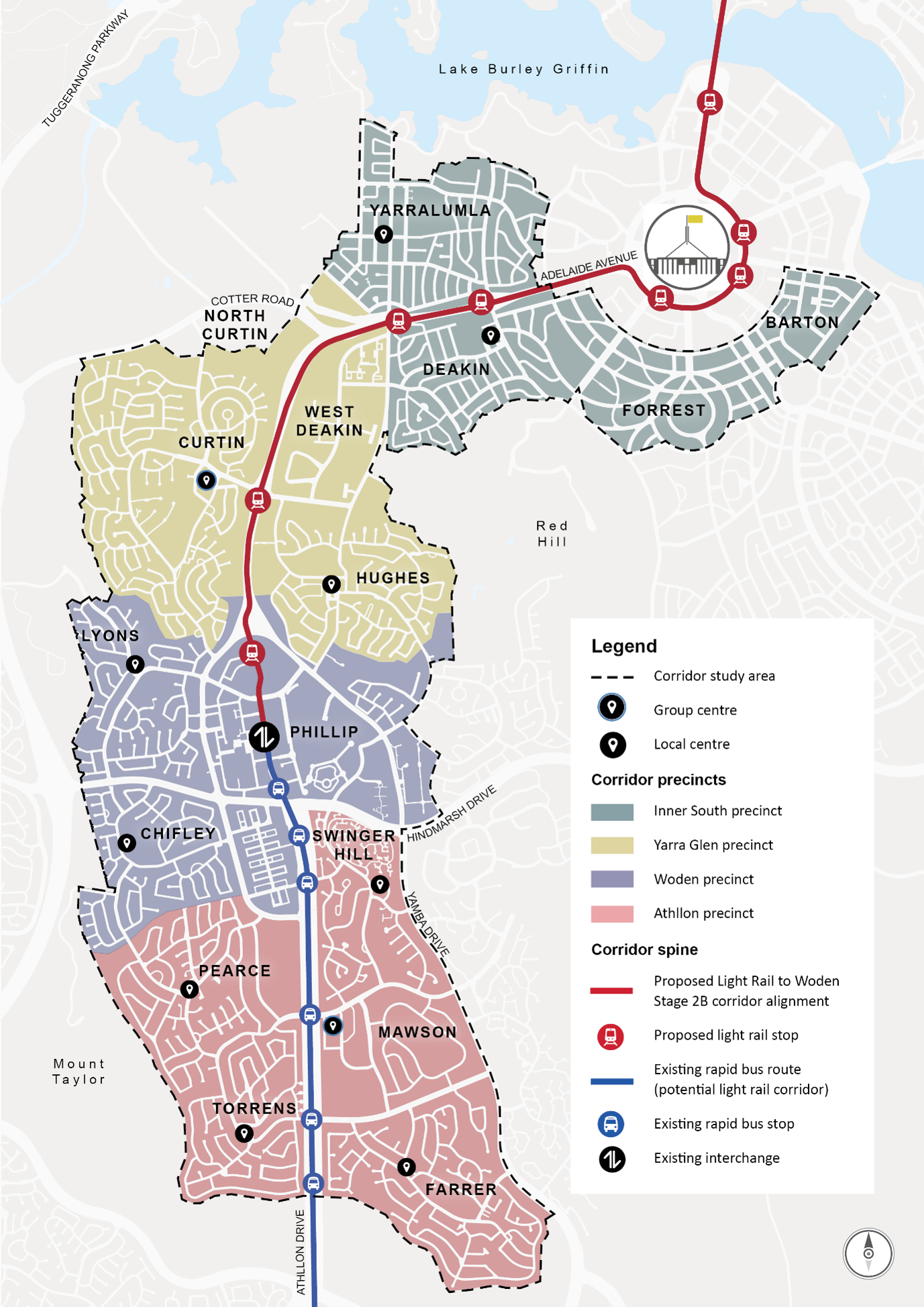
Figure 1: A map of the study area and precincts within the Southern Gateway corridor.
Draft Southern Gateway Planning and Design Framework
The Southern Gateway Planning and Design Framework is a non-statutory, strategic planning document that sets out the long-term vision for the corridor to 2050 and beyond.
The draft Framework is built around the following eight key principles which set out the concepts for how the vision can be achieved. They are based on existing ACT planning and transport policy, and set out what matters most, like better transport, green spaces and housing choice, and will guide decisions across the entire corridor.
- Support delivery of more housing close to transport, centres, jobs, services and facilities.
- Promote human-scale neighbourhoods through gentle densification.
- Strengthen active travel connections between housing, rapid transport stops, centres, jobs, services and facilities.
- Ensure access to social infrastructure including community and recreational spaces.
- Create walkable urban villages with easy access to daily needs.
- Reimagine Adelaide Avenue, Yarra Glen, Callam Street and Athllon Drive as a landscape-led, multimodal corridor spine, complementing the function of streets as places for civic life and activity.
- Realise the corridor’s heritage.
- Protect and enhance nature in the corridor.
Have your say
The draft Framework is now open for community engagement.
Visit the ACT Government YourSay Conversations to read the draft Framework and have your say.
What happens next
Once engagement closes a listening report will be prepared and released to the community. The feedback received will be used to inform the final Framework.
Once the final Framework is released, it will guide how the area grows and changes over time.
This won’t be the last chance for community input. There will be more opportunities to have your say as planning progresses in the corridor as part of future related projects.
Future changes to planning controls and policy
The draft Framework is a strategic planning document that sets out a long-term vision for the corridor to 2050 and beyond. While it does not change planning rules, it will help guide future planning and development decisions.
To support this vision, changes to planning controls will be needed through updates to the Territory Plan and, in some areas, the National Capital Plan. The ACT Government and the National Capital Authority will work together on these changes and continue to consult with the community as specific proposals are developed.
Updates to the Territory Plan (the ACT's planning “rulebook”) are made through Major Plan Amendments. These amendments can enable significant changes, such as new housing, shops, offices, community facilities and changes to building heights.
Key things to know about Major Plan Amendments:
- Changes will be introduced in stages over time rather than all at once.
- Each stage will focus on different parts of the corridor, starting with priority areas identified for change.
- Every Major Plan Amendment includes opportunities for community consultation and feedback before decisions are made.
In simple terms, Major Plan Amendments are the process used to update planning rules to support future development.
Learn more about the Territory Plan and Major Plan Amendments.
While the draft Framework does not determine future development outcomes, it will help guide future Major Plan Amendments and also inform the review of District Strategies, which occurs every five years.

